Art ·
The healing power of art
By Martina Fettolini
Listen
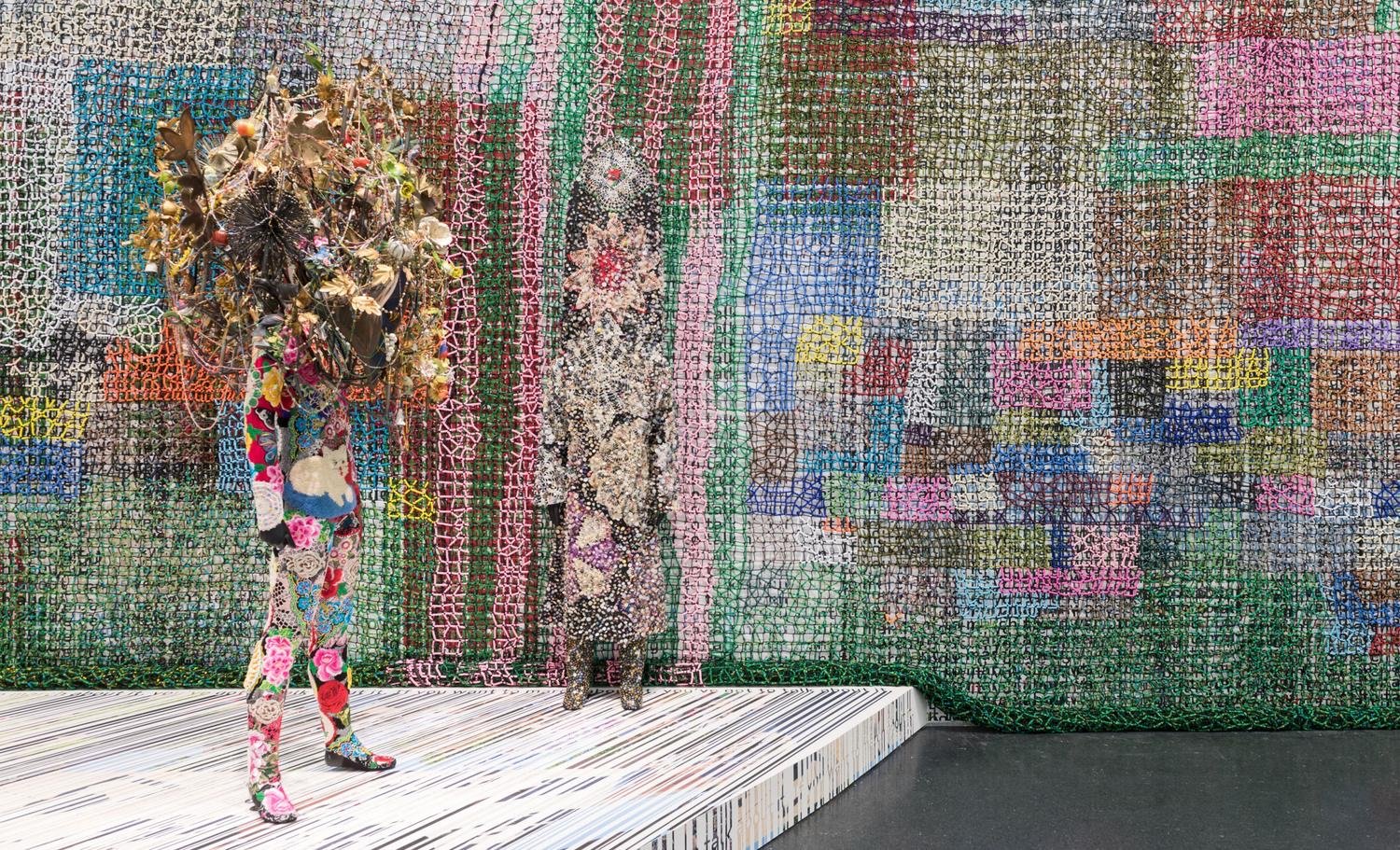
There is a sentence by Nick Cave, the Chicago visual artist, that strikes harder than many others: “Thank God for art, because it was my salvation.” It is not the romantic statement of someone who sees art as an ornament of life. It is something more urgent, more visceral. It is the voice of someone who found in the creative act a concrete way to survive.
Cave works with colour, materials and hypnotic circular forms inspired by brain scans of young African Americans affected by gun violence. Behind that swirling aesthetic lies a precise thesis: art also serves to pass through pain.
Over the twentieth century, and even more intensely in recent decades, researchers, therapists and artists have begun to understand something traditions had known intuitively for centuries: that artistic creation, in all its forms, can do for a traumatised mind what words alone struggle to achieve.
To understand why art works, we first need to understand what happens to the brain when it suffers trauma. In people who develop post-traumatic stress disorder (PTSD), some brain regions change structurally. The hippocampus, central to forming memories, shrinks. The amygdala, which handles fear and emotional responses, becomes overactive. The frontal cortex, responsible for judgement and emotional regulation, weakens.
There is, however, a neurological detail that is often overlooked and is crucial to understanding the role of art: Broca’s area, the brain region that governs language, is impaired by trauma. People who have lived through a traumatic experience often cannot put it into words because the mechanism that turns experience into language is literally damaged. The images of flashbacks exist, vivid and intrusive, but they remain mute. Language cannot reach them.
This is where art becomes a tool. Whether through brushes, musical instruments or cinema screens, art forms reach regions of the brain that words cannot.
Art therapy - the discipline that combines the visual arts with psychotherapy - rests on this fundamental principle: bringing out what is inside. Lindsey Vance, a counsellor and art therapist specialising in trauma, puts it simply: through colours, textures, shapes and materials, patients build an alternative grammar around what they are going through. A growing body of scientific literature supports the effectiveness of this approach. Studies published in specialist journals show that art therapy significantly reduces anxiety symptoms and offers patients with PTSD an alternative way of processing emotions and information. Research in this field is still evolving and the number of quantitative studies remains limited, but the direction is clear.
What emerges from clinical practice is also something less measurable but equally important: trauma, at its core, is also a loss of control, and creating even something imperfect cracks that feeling. It shows that you can act on the world instead of just suffering it.
Not only the visual arts: music, too, holds a special place in this landscape, for reasons neuroscience has begun to clarify with ever greater precision. Unlike language, which the brain processes through areas tied to logic and syntax, music activates several brain regions at once: those of emotion, memory, movement and reward. That is why a song can make you cry before your mind has understood why, or bring back a memory buried for years.
The key mechanism is the dopamine system. Research published in Nature Neuroscience and Frontiers in Psychology has shown that listening to pleasant music activates the nucleus accumbens (the brain’s pleasure centre), triggering the release of dopamine. This is the same reward circuit activated by food, sex and certain drugs. In essence, music goes straight to the system trauma damages most: the one that produces pleasure, motivation and a sense of safety.
Moreover, PTSD is associated with a hypodopaminergic state, a chronic reduction of dopamine levels in the brain. Several studies suggest that music therapy can counter precisely this dysfunction, stimulating the ventral tegmental area and gradually restoring a neurochemical balance upset by trauma.
This therapy can take many forms: guided listening, improvisation, songwriting, playing instruments in a group. The last, in particular, adds a social dimension that is often crucial for people with PTSD: a sense of belonging, synchrony with others, the collective ritual of making music together. Throughout human history music has long been a tool of social cohesion, and this ancestral function is now an integral part of its therapeutic power.
Whether we are talking about visual arts or music, the underlying mechanism is the same: these art forms reach parts of the traumatised brain that traditional talking therapy struggles to reach. They bypass the language block and activate emotional and reward circuits, giving patients back a sense of control and creative ability.
It is certainly important not to idealise any of these practices. The scientific literature is still developing, samples are often small, protocols not always standardised. Art therapy and music therapy should not replace psychotherapy, but accompany and complement it - and in some cases make it possible where it was not before.
But in all this there is more than a technique: there is a vision of what it means to heal. That is, the possibility of turning trauma into something navigable, of giving it an external form separate from us, observable, changeable. Of moving, in the words of Shaili Jain, a psychiatrist specialising in PTSD, from surviving to living.
Art, after all, has always found a place for what seemed to have none, proving its power precisely when reality becomes hardest to inhabit.