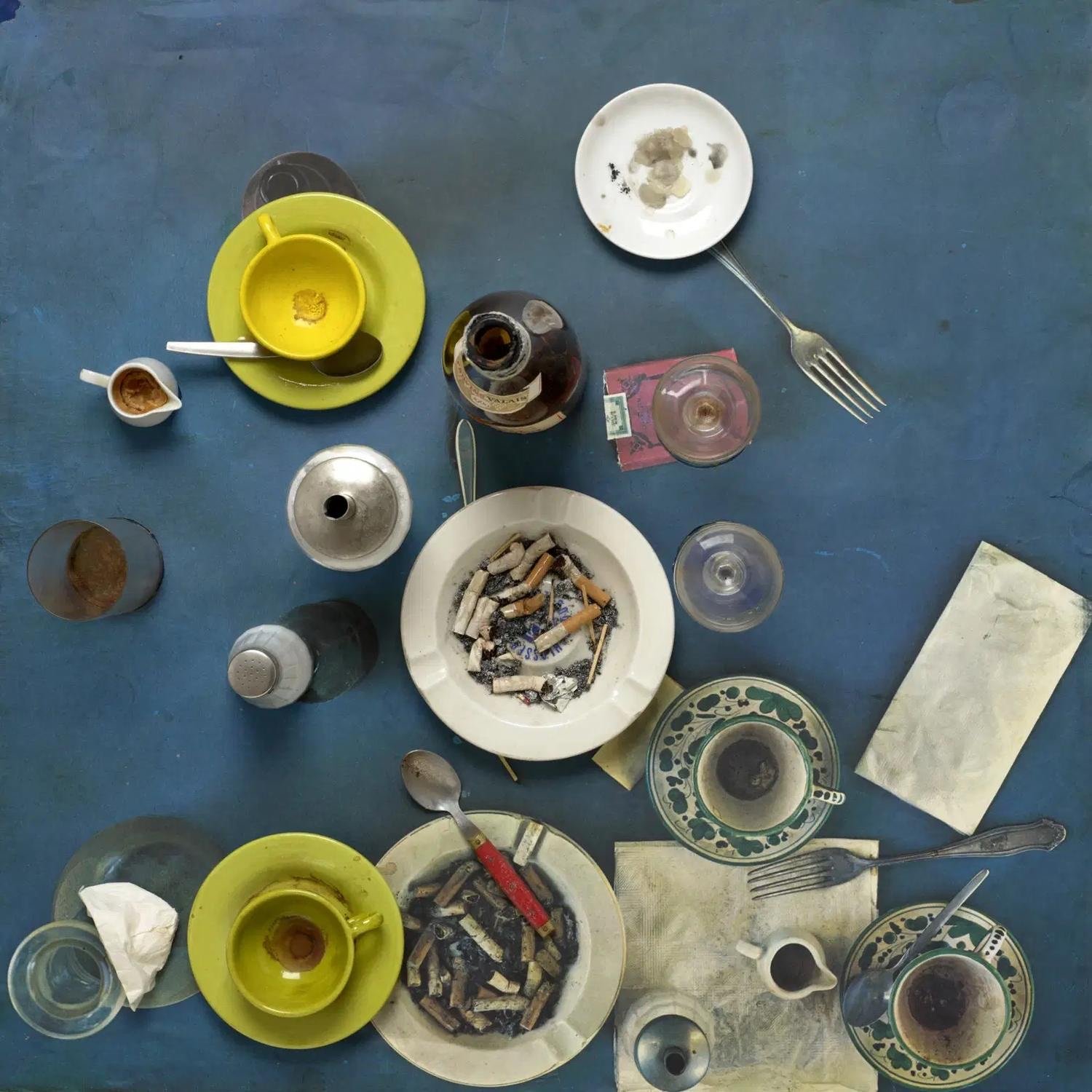
Question your teaspoons
By Simone Resigotti
Listen
Sometimes we feel that our life is not enough. We have the impression that everything is slipping away and we wonder how to hold on to all that is leaving. We blame time. We keep telling ourselves there are never enough hours in the day, and we live in a desperate chase after something that seems to escape, never to return.
But what is it we are really losing? Not an abstract concept measured in minutes, hours, days, years… No. What we really lose is the ordinary, the moments when nothing happens.
Life seems to reveal itself to us only through exceptions. We remember that cars exist when they crash, we notice houses when they are demolished and, sometimes, we realise we love someone only when we have lost them forever.
In our hurry to record the so-called big things, we forget that what matters lies in small, banal habits. We are anaesthetised to the ordinary. We pass through it without thinking, as if it held nothing worth saving. And yet life is almost all there.
Georges Perec called it the infra-ordinary and, in the book of the same name, asked how we can notice what happens every day. How can we free the habitual from the noise of the sensational? How can we give everyday life back a meaning able to tell us something about who we are?
The work was born of an attempt to “question what seems so obvious to us that we’ve forgotten its origin.”
Perec writes that what we should question are bricks, concrete, our utensils, our schedules. Everything that seems to have stopped surprising us forever. He even goes as far as urging the reader, in an appeal to recover the traces of a wonder that once existed and was lost somewhere along the way:
“Make an inventory of your pockets, of your bag. Ask yourself about the provenance, the use, what will become of each of the objects you take out. Question your teaspoons.”
A Paris street observed on different days and described house number by house number; two hundred and forty-three texts of summer postcards; an inventory of everything the author ate in 1964; an extremely detailed description of his desk, examining every single object on it; a series of walks in London… These are the things you come across reading The Infra-Ordinary.
At first sight they seem useless, and they probably are. But certain trifles hold far more truth than many of the grand things through which we try to make sense of our existence.
As Jack Gilbert put it in his poem Highlights and Interstices:
We think of our lives as mostly the memorable.
Marriage remembered as the children, vacations,
and emergencies. The uncommon parts.
But the best is often when nothing is happening.
The way a mother picks up the child almost
without noticing and carries her across Waller Street
while talking with the other woman. What if she
could keep all of that? Our lives happen
between the memorable. I lost
two thousand ordinary breakfasts with Michiko.
What I miss most about her is that
which I can’t remember.