What does a house say about us?
By Chiara Conforti
Listen
In contemporary art the house, from a private and seemingly neutral space, becomes an extremely powerful narrative tool. It is no longer the warm, protective refuge of the bourgeois tradition: it becomes a metaphor for the Self, a Freudian surface on which identity and inner life clash. Artists intervene on the house the way one intervenes on a body: they dissect it, empty it, deform it. It is a broad, not entirely intelligible container of meaning, used by turbulent personalities to speak about their inner lives.
One of the most significant contemporary artworks alluding to domestic intimacy is My Bed, by the young, provocative British artist Tracey Emin. The installation, made in 1998 after a bout of depression, quickly became one of the key works of the Young British Artists movement. It consists of the artist’s unmade bed, surrounded by objects strewn about, taken straight from her room. My Bed is controversial and drew heavy criticism: the work explores the bed as both cradle and grave. The scene is sordid, violent: through the lens of the domestic environment it explores anxiety and depression, exposing a vulnerability in which all of us can, at least partly, recognise ourselves. No explanation is needed; the bed is human and says more than any written word. Through it, Emin tells us of her desperate need for affection, to be understood.
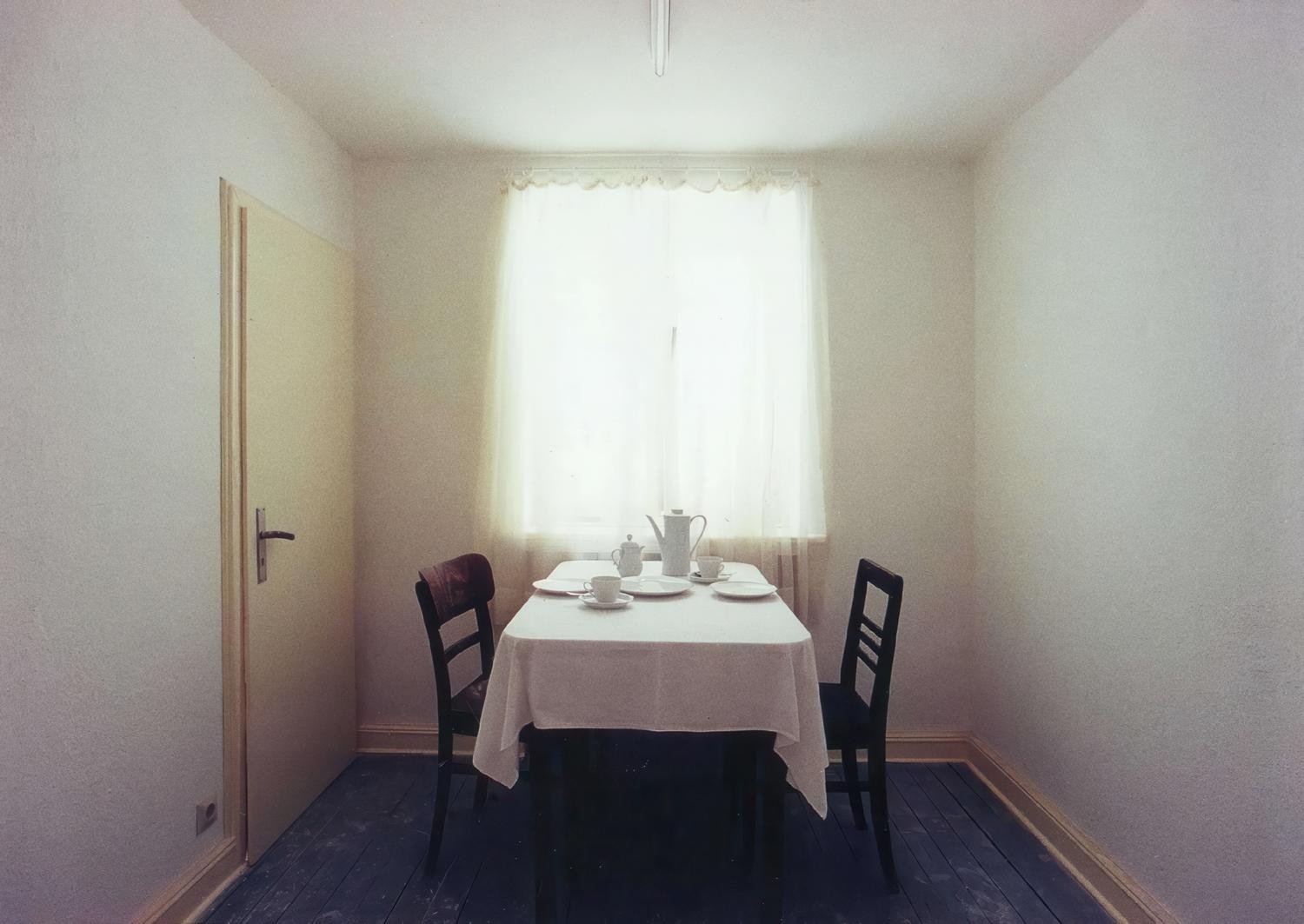
The concept of home is perfectly explored by Haus u r, the work Gregor Schneider made after renting a house in Rheydt in 1985, on Unterheydener Strasse, and rebuilding inside it his old family home - what the title calls “the dead house”. As a continuous process lasting more than a decade, Haus u r rejected architecture’s claim to offer permanence and distinction, favouring instead a fundamental indeterminacy. Haus u r uses the identity of the house to stir feelings of anguish and estrangement in those who enter it, playing precisely on the intrinsic value of domestic spaces.
Louise Bourgeois, too, made wide use of the symbol of the house to speak of wounds and lived experience. One of her most recurring subjects is naked women whose heads are replaced by houses, addressing themes of domesticity and female identity. She first used the motif in the 1940s in a series of paintings titled Femme Maison (Woman House). Similarly, the photographer Laurie Simmons made Walking House from the series Walking and Lying Objects (1987–1991), in which a woman seems to have been swallowed by a typical suburban house. In both works the woman is inseparable from the house, metaphorically and literally; both artists would argue that the domestic space is conventionally “a woman’s place”, describing the female body as the true archetypal home.
The truth is that the house is unfavourable ground for poetic study, because it is a physical place before it is a psychological one; we are used to examining it as a geometric, tangible object ruled by the straight line, so it ought to resist metaphors of the human body and the soul. But the house-human transposition happens immediately, as soon as the house becomes a space of comfort and human reflection.
It cannot help becoming a theatre of the spirit, because it shields our intimacy from the outside world.