Strange Narratives: Uketsu and the novel in the digital age
By Alice Ferretti
Listen
The digital age has led even the most devoted lovers of paper to start seeing books as hardly interactive objects, almost out of time in a world dominated by social media and artificial intelligence. How, then, can they find their place in this endless whirl of stimuli that breaks our attention and gets us used to consuming every piece of content as quickly as we forget it?
In Italy, one possible answer comes from Stile Libero, the Einaudi imprint that historically set out to make room for “what is happening that is new and that the publishing machines do not register”. After its glorious season in the 1990s, that programmatic goal seemed to have been lost, as the imprint settled into publishing history, noir and mass-market genre fiction, mostly Italian and American. Then, last summer, Stile Libero published Strange Pictures, by the transmedia artist Uketsu.
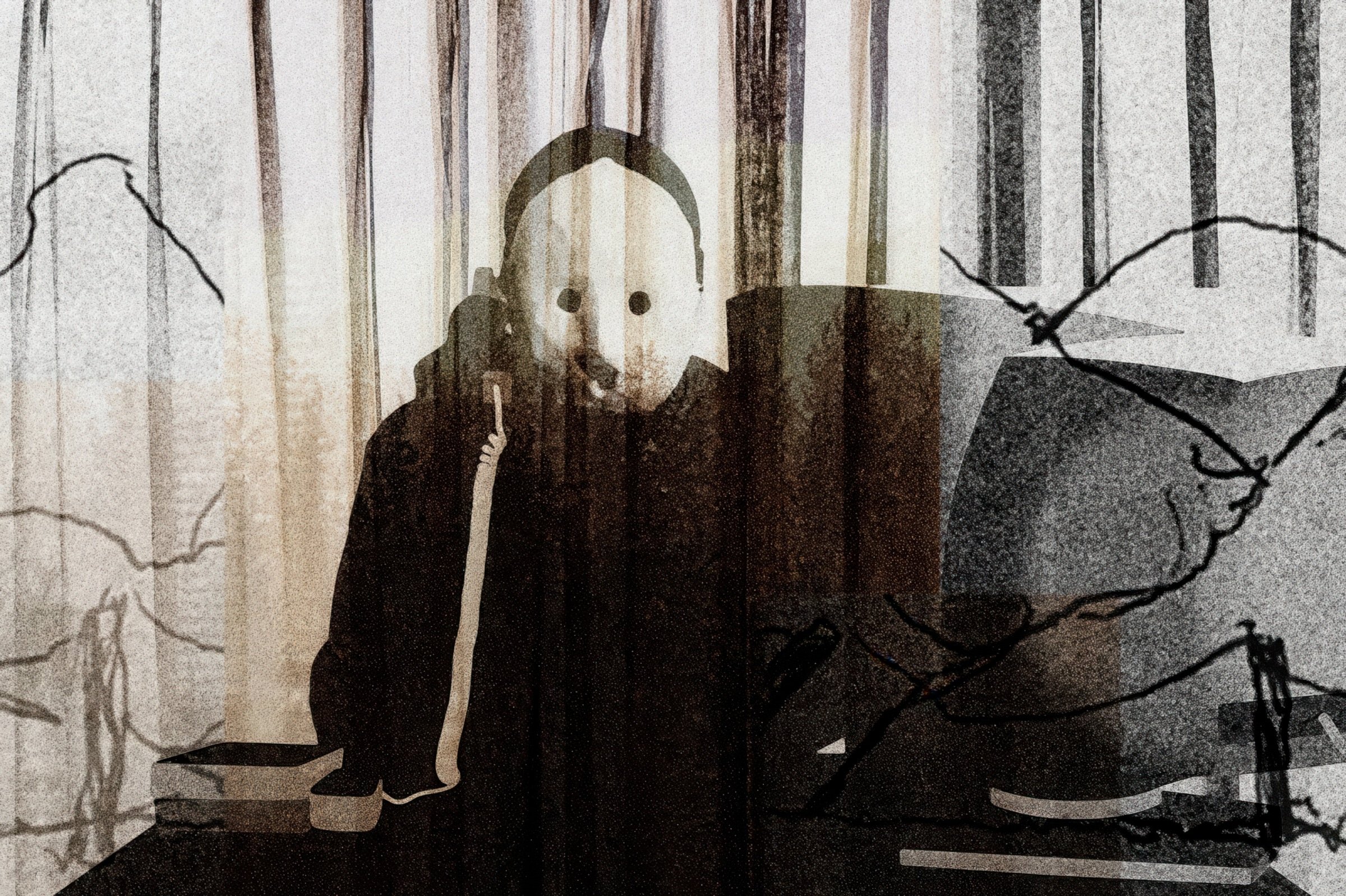
Uketsu - “rain hole” in Japanese - emerged from the depths of YouTube in 2018. In his videos he speaks with the distorted voice of a little girl, wears a white papier-mâché mask and a black bodysuit. In his case anonymity is not just a matter of marketing or protecting his privacy - as it has been in recent decades for famous names in music such as Sia, Marshmello and Liberato. His black costume pays homage to the kuroko, the stagehand of traditional Japanese theatre who, though he steps onto the stage, must be invisible so as to leave room for the story. Uketsu’s empty mask makes room not only for the stories, but also for us viewers, who can project our fears and anxieties into its eye sockets. This is also the mechanism behind his works.
Uketsu does not write simple novels, but augmented narratives. Works like Strange Pictures and the latest, Strange Houses, began as “visual audiobooks” on YouTube before becoming manga, books and genuine cultural phenomena. In these stories the image is not an accessory but the engine of the investigation: distorted floor plans, children’s sketches and scientific diagrams become graphic clues the reader has to rotate, enlarge and decipher, turning reading into an experience close to a detective video game. The reader thus stops being a passive observer and takes on the role of detective, alongside the characters in the novel.
This mechanism - a story that only comes together through the collective effort of decoding it - is not isolated in today’s landscape. In the West we have already seen it in Alternate Reality Games, transmedia narratives scattered across several platforms and pieced together in real time by entire communities: the best-known case remains the Slender Man mythology born of the Marble Hornets series, where amateur footage, forums and comments became as integral to the story as the original videos. Uketsu applies the same puzzle logic to a more traditional publishing format, bringing the narrative grammar of the new millennium onto paper.
In Strange Houses, his latest release, horror grows more radical through absence: windowless rooms, impossible floor plans, corridors that seem to lead nowhere. It is not monsters that frighten, but the spaces themselves, familiar and yet wrong. An aesthetic with a very close relative in the visual culture born online in recent years: the Backrooms, the phenomenon that started from an anonymous image on 4chan and then exploded into a fully fledged shared mythology of yellow carpet, fluorescent lights and endlessly identical rooms - now on the big screen as a feature film.
Emptiness is the cause and engine of the horror in Uketsu’s stories. His murderers are mothers whose motherhood is deformed, children used to kill - they are the product of a reality that is structured but never fully filled, where the individual does not exist beneath the mask, beyond their social role. Uketsu’s novels manage to bring the mechanisms of digital storytelling onto paper. They make us agents, detectives of the narrative, with control in our hands, as with every other kind of narrative content of our time.
One question remains open: in borrowing the ways of video games, reels and posts, are these strange narratives not perhaps content that triggers the same one-sitting dopamine hit, calibrated for instant satisfaction and bound to run out after a few seconds, leaving us once again consumers in search of the next thrill?
In short, the doubt is whether these works can, in their deep structure, escape the digital mechanism they carry, or whether they are just as fleeting. Because perhaps what we truly miss, in the age of the algorithm, is not mystery, but the time to absorb it and think it through.