Art ·
Why does an art forgery speak to us like an original?
By Federico Borsoni
Listen
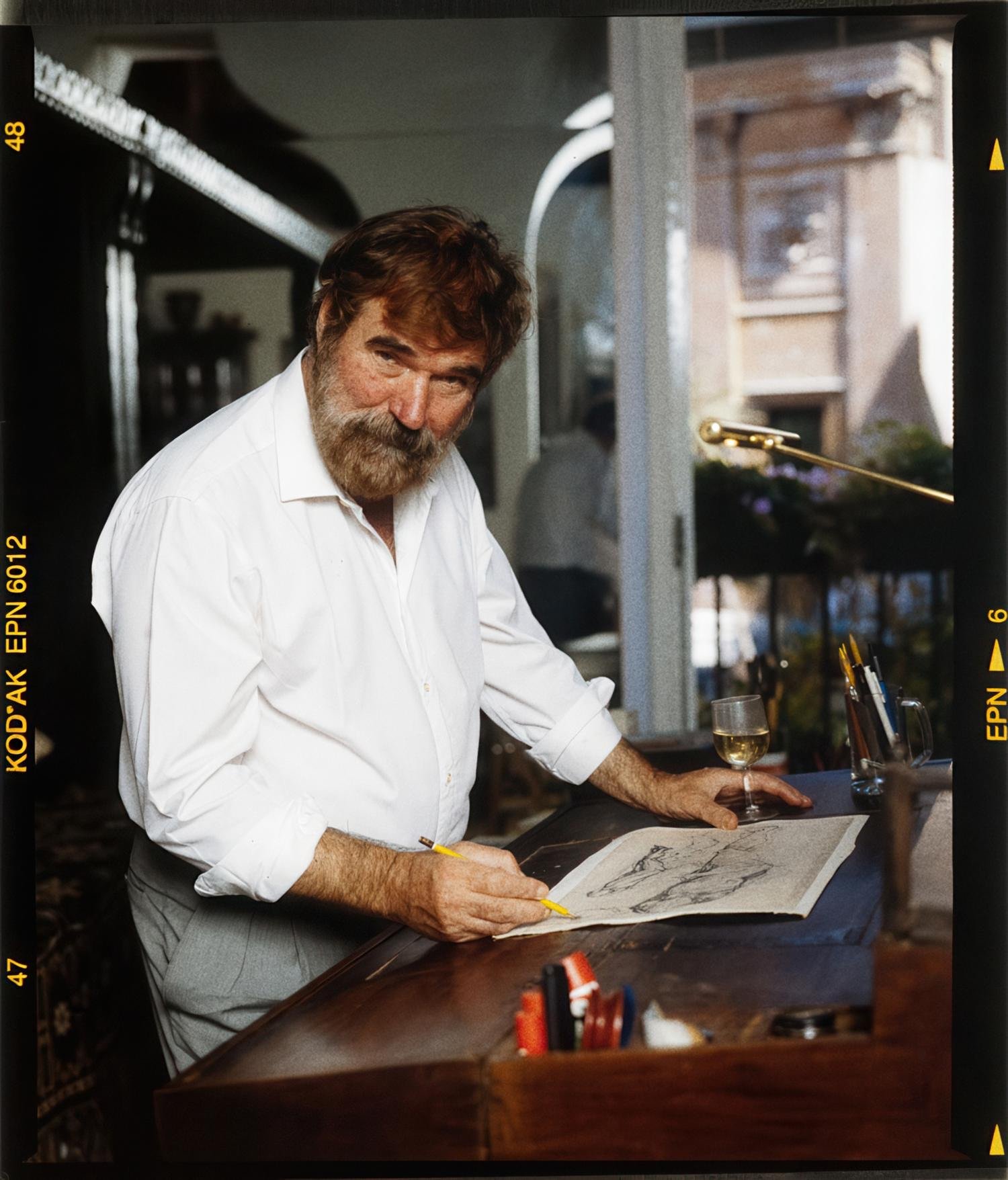
Faced with a drawing by Eric Hebborn we feel lost - not because we have been fooled, but because we are forced to look at the work in its nakedness. If a mark has the power to convey a deep emotion, a spiritual tension or formal perfection, what does the discovery that it was drawn by the “wrong” hand add (or take away)? The art system has built a house of cards on the idea of the “relic”: the work is valuable as an object physically touched by the Artist-Saint. But that is devotion, not aesthetics. If art is a language that serves to reveal truths about the world or about ourselves, then the truth of that message should be independent of its sender.
Hebborn turned the forger’s craft into a radical critique of the idea of genius. By showing that a seventeenth-century line can be regenerated by a contemporary hand, he cut the tie between the work and its author’s birth certificate. His skill acts like a mirror: it forces us to recognise that what we admire in a drawing is its internal architecture, far beyond the dust of time or the prestige of the signature. His work reminds us that style is a shared language, a code that anyone with the necessary talent can speak again, stripping the notion of the “original” of its dogmatic sacredness.
When a Hebborn forgery moves us as much as an original Rubens, we have to ask: where does beauty reside? Is it trapped in the fibres of the paper and the pigment, or is it an event that happens in our eye? It makes us think how often critics do not look at the image, but simply “read the label”, searching the catalogue for what they cannot see on the page.
This fragility of judgement found a practical confirmation in Italy in 1984, when three stone heads were fished out of the canals of Livorno. Within hours, the leading experts were hailing a miracle, seeing in those stones Modigliani’s “creative fury”. Then three bored students showed off an electric drill, and that “fury” instantly turned into a banal parody. But if those heads had been able to give off a magnetic aura up to a moment before the confession, it means the beauty was not in the granite, but in a collective hallucination produced by the prestige of a name.
Han van Meegeren pushed this provocation to its extreme consequences, striking the system where it is most vulnerable: in its need for confirmation. His fake Vermeers were made to fill the theoretical gaps of art historians, offering them the exact object they were looking for to validate their careers. Here the forgery becomes a psychological trap even before an aesthetic one. Van Meegeren revealed that expert judgement is often an act of projection, in which the work disappears to make way for a ready-made narrative the viewer wants to believe.
The role of art is not to be a historical document or a financial asset guaranteed by a name, but rather a catalyst of meaning. By revealing his deceptions, Hebborn gave us back a fundamental freedom: the freedom to admit that a work can be immense even if it is signed by “nobody”. After all, the most dizzying testimonies of human ingenuity flourish precisely where the identity of the individual fades to make room for the archetype. Who painted the cave of Altamira or carved the Nazca lines into the desert? In those works we do not look for a signature; what shakes us is recognising a trace that belongs to humanity as a conscious being.
It is aesthetics becoming the structure of the soul: a primordial language that precedes history and speaks directly to our cognitive architecture. In this sense, art cannot be a market product, but a necessary function of human consciousness, able to produce a shiver that needs no documentary proof because it resonates in a collective memory that goes beyond the individual.
Art does not need documents to exist. If anything, it demands the courage to pause and the humility to look: the ability to recognise the value of a mark that prompts us to question ourselves. Because if beauty waits for a certificate to be recognised, then we are not looking at a work, we are just looking for someone to give us permission to be moved.
One doubt remains: are we still able to stand alone in front of an image, without the comfort of an attribution? Or are we so afraid of our own judgement that we need a label to know what we are allowed to love?