Film ·
Why do we tell the pain of others?
By Elena Tonon
Listen
Our own pain and the pain of others have always been told. Through books, songs, poems, paintings, photographs, films.
And they have always been listened to, read, taken in. Some identify with it, some cynically take note, some feel relieved not to be alone.
Some argue, however, that watching the pain of others confines us to passivity: you are watching, not acting. You are safe, comfortable, distant. Taking part emotionally is not enough to make you truly involved.
You are just a spectator.
It is not a new argument, yet it never stops being relevant. Is there a line between turning other people’s pain into a spectacle and wanting to tell a reality different from your own without filters, without falling into clichés and trivialisation?
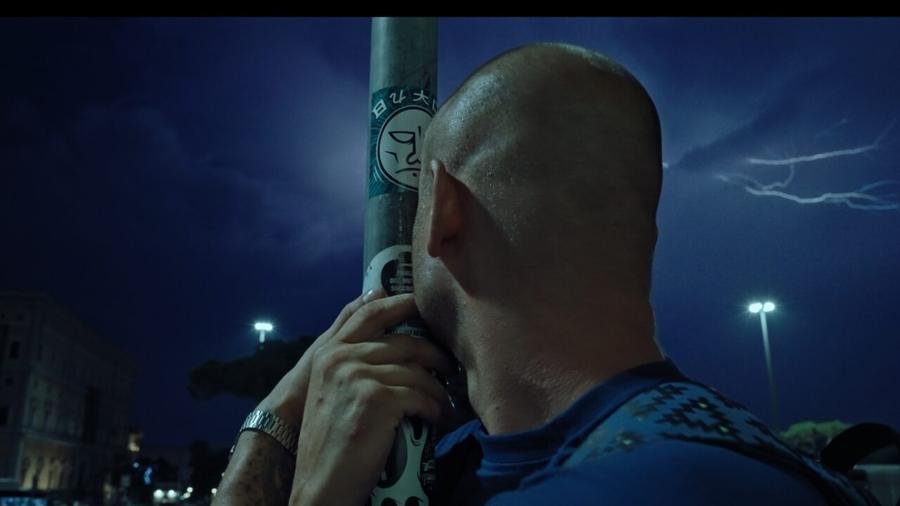
Recently, in Italy, one film raised this question with particular violence, partly because the story it tells is particularly violent. It is “San Damiano”, a documentary by Gregorio Sassoli and Alejandro Cifuentes, shot just outside Rome’s Termini station around the lives of the people who have carved out a space to survive on those stretches of street.
The camera follows a group of them and, above all, Damiano, a thirty-five-year-old of Polish origin who came to Italy dreaming of becoming a successful singer. Damiano is violent, angry, ferocious: he fights bloodily with the people he meets, with those who, motionless, dot that place of transit. At the same time he is extremely sweet, childlike, fragile: he sings, falls in love, has sex, is moved while writing his songs. Damiano moves through the streets as if shaken by a constant electric charge, desperately searching for a calm that might quiet the disturbing noise of his past.
The documentary pulls no punches, it does not censor - or if it did, it certainly was not the most unpleasant or provocative images that were cut - and it renders in all its rawness a microcosm that exists and is systematically ignored. There is no false moralising, no charitable uplift, no pity. It goes beyond spectacle to wade into, and get dirty in, the swamp and the mud.
And yet for some this documentary is pain pornography, pure exhibitionism and self-indulgence on the part of its two authors. There are several shock images in San Damiano, crude gestures sometimes shown gratuitously and amateur footage included to expose humiliating fragility - where humiliation comes, as Kundera described better than anyone, from being forced to be what you are without ever really having been able to choose it.
In her essay “Regarding the Pain of Others”, Susan Sontag writes that when we look at an image of someone else’s pain we are never completely transformed. And yet it seems vital to document the reality around us, even the most ignoble and shameful, to give it back a meaning and an importance it could not otherwise have: the possibility of becoming memory.