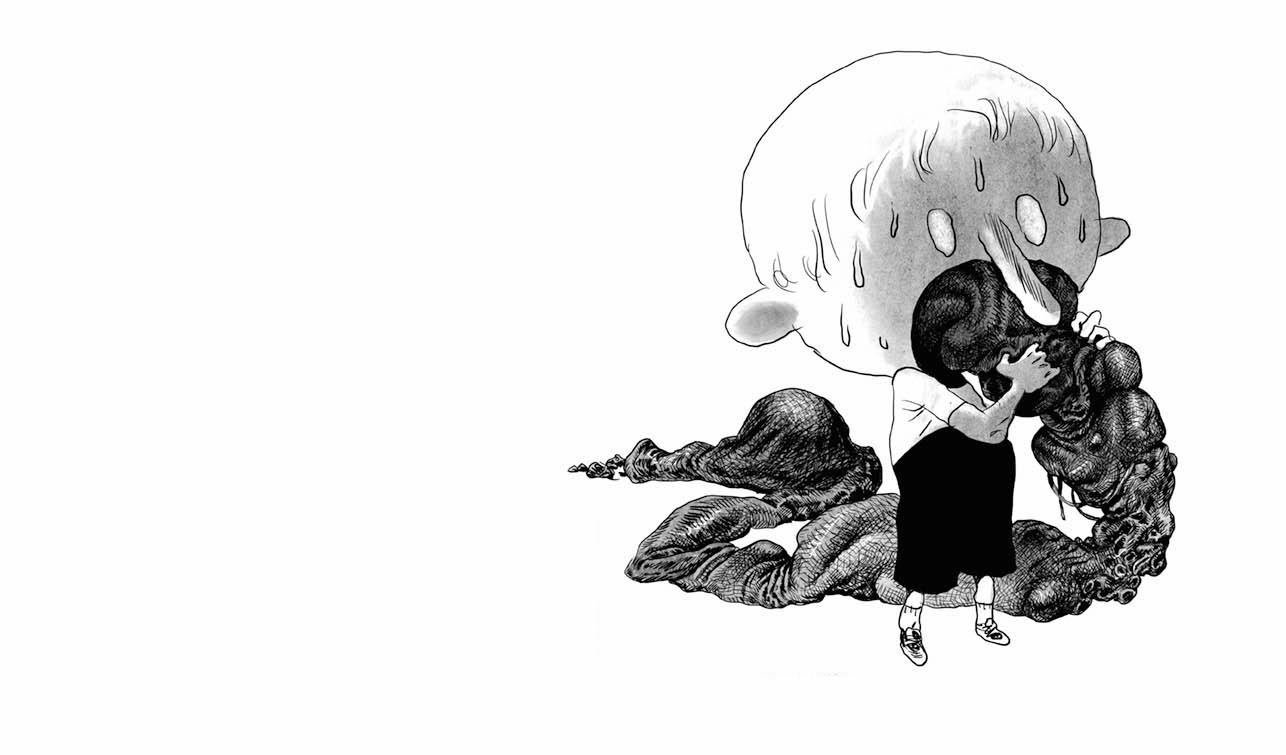
The illusion of bodily freedom
By Alice Pettorazzi
Listen
“How many notebooks would it take just to describe everything our body does without us thinking about it?” asks Daniel Pennac in the novel Le journal d’un corps (2012). Pennac puts at the centre of the story an ordinary man, or rather, an ordinary body. Year after year, day after day, the protagonist meticulously records the changes in his body from the age of 12 to 87.
The idea of keeping a secret diary is, on the face of it, not that revolutionary. Society makes us keep diaries all the time: working hours, expenses, trips, goals, grades and then the blood pressure monitor, the food diary, the step counter, the number on the scale; we even keep track of our mood swings - but careful, for heaven’s sake, not to look too desperate, or you end up straight at the psychiatrist’s (and who knows what Mrs Maria on the fourth floor thinks of a woman in therapy). And yet, with this novel, Pennac turned a way of thinking on its head. He put into words something that an ordinary body diary never mentions: sensations. And he did it without mincing his words.
A shameless, free kind of writing; so blunt it is almost uncomfortable. The result? The awareness of having a real body, without filters, clothes, names or labels, one that can be observed and described.
In the same way, in her early years as an artist, Adrian Piper photographed her body day after day in front of the same mirror in her room. She composed a diary of reflections, of light and shadow. She is always the same figure in the same place, taking note of herself, exploring the idea of having a female body, breasts, a vagina, and of being able to cover or uncover it at will. Piper’s body, too, uncensored in front of the mirror, is alive, aware; it has a place in space and is free to express itself. The same freedom that Piper puts to the test in performances where she walks the streets of New York watching how people react to her body “altered”, for instance, by bandages, towels, moustaches, sunglasses and wigs.
A freedom that, in words, seems to exist everywhere, but which, all things considered, looking at how our bodies and above all our gazes behave, exists nowhere at all - in fact, it is the foundation on which a castle of contradictions is built.
Today you can be whoever you want, you must be whoever you want, but careful: if you want to find a job you have to look respectable; you can dress however you like, but don’t pair blue with black because it looks tacky; you can wear a miniskirt, but if you get raped it’s your fault; you can sleep with whoever you want, but don’t let too many people know.
We profess openness to every body shape, every skin colour, every human gender; we boast of our skill in building virtual and human connections. And yet, between our bodies there is an abyss, a fear that keeps us apart and stops us from lifting our heads to exchange a smile with the person sitting across from us on the tram.
Despite everything, we keep writing diaries, analytically studying bodies that live seemingly perfect lives.
But when will we really start to feel what it is like to meet the eyes of another human being?