Manuscripts don't burn, but what about our consciences?
By Martina Fettolini
Listen
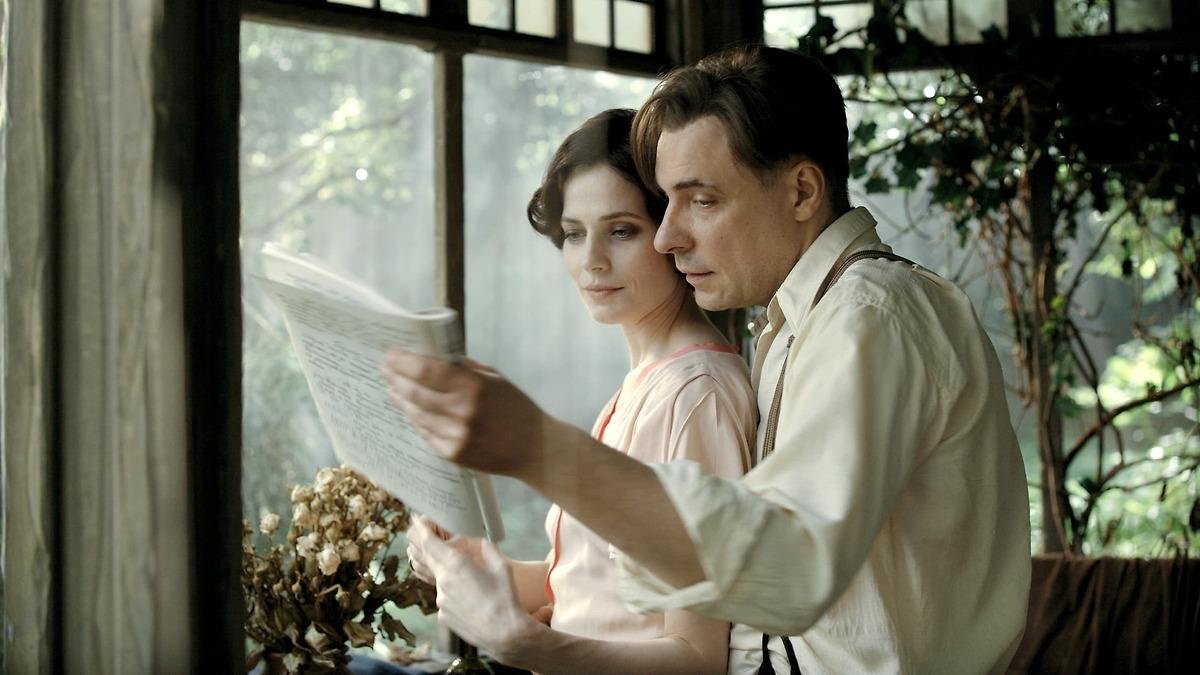
The Master is the persecuted writer who pays the price of writing against the tide with marginality, madness and inner destruction. Bulgakov projects onto him his own experience as an author ostracised by the regime: a fate in which creation is not a privilege but an open wound.
Writing becomes an act of resistance, and every act of resistance has a cost.
The story turns on a paradox: the Master tries to destroy his own novel by throwing it into the fire, as if to free himself of the unbearable weight of a work that finds no place in the world. And yet that very gesture gives rise to one of the most powerful lines in twentieth-century literature: “Manuscripts don’t burn.” It is the declaration that authentic art, even when censored or condemned, survives beyond its author, beyond institutions, beyond the will of those who would erase it.
The novel within the novel - the story of Pontius Pilate - becomes the proof of this survival: a persecuted work that, despite everything, writes itself, rises from the ashes, seeps into people’s consciences. In this split between fiction and reality, Bulgakov affirms that the artist’s destiny is not to be understood or celebrated in the present, but to leave a mark that works over time, even from afar, even in silence.
The Master’s story, then, questions us about the relationship between art and truth. His novel about Pilate is not a “comfortable” work: it speaks of the responsibility of power, the loneliness of choice, the cowardice that marks history. Uncomfortable themes that no regime would want to see staged. But this is exactly where the essence of art lies: not in conforming, but in disturbing, in making visible what others would rather keep silent.
Today, perhaps, we no longer live under the brutal oppression of totalitarianism, but under subtler forms of censorship: those of algorithms, of the market, of consensus. It is no longer fire that burns manuscripts, but the silence of indifference, the marginality of circuits that never reach a wide audience, the pressure to make everything saleable, immediate, harmless.
And so the question Bulgakov leaves us with is radical and very much of our time: are we still willing, as artists or intellectuals, to pay the price of truth? To risk marginality in order to protect the authenticity of a voice? Or do we prefer to adapt, becoming invisible precisely because we are harmless?
The Master, together with Margarita, finds peace not in glory or recognition, but in a kind of “eternal rest”, far from the world that did not welcome him. It is an ambivalent ending: consoling on one hand, tragic on the other. As if Bulgakov were telling us that true art never fully belongs to the present, but lives in another dimension, suspended between incomprehension and necessity.
And perhaps this is exactly where the artist’s destiny lies: in inhabiting this uncomfortable space, where truth does not coincide with consensus. A space where you keep writing even if no one reads, because - as Bulgakov reminds us - manuscripts really don’t burn.