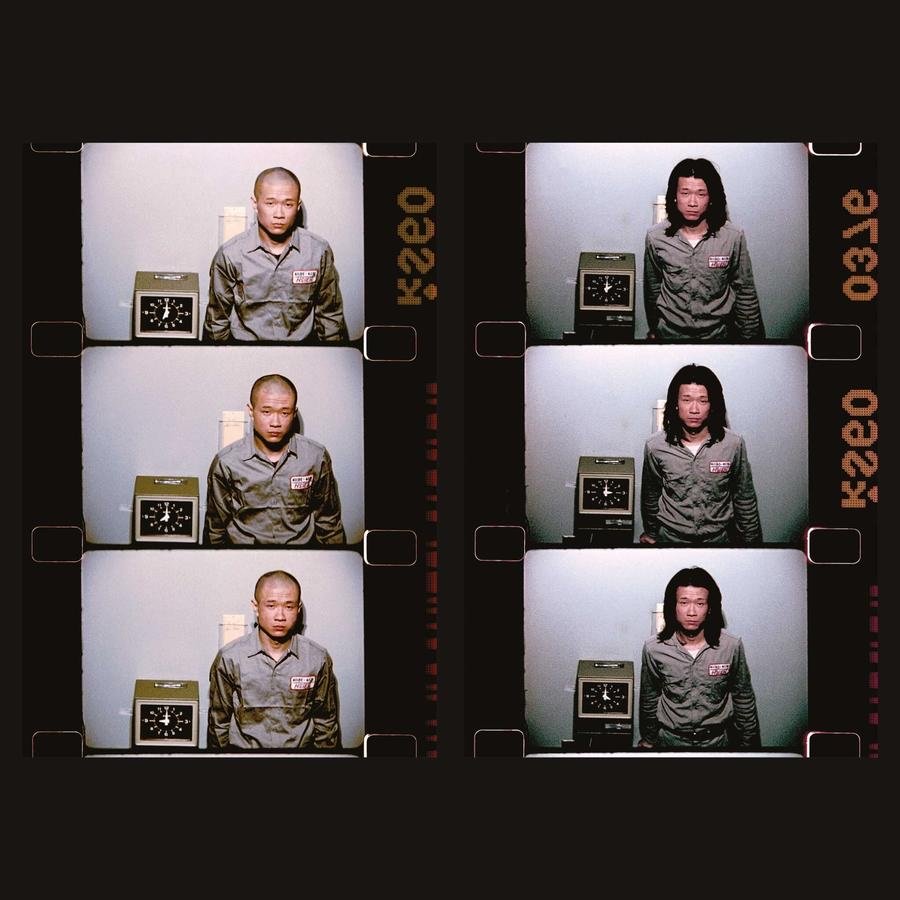
No Art Piece: Against the “dictatorship” of doing
By Alice Luigetti
Listen
If you don’t produce, you don’t exist.
If you don’t do, you are useless.
Contemporary society has drummed into us the idea that our worth can only be measured in terms of performance, results, output.
We have become cogs in a mechanism that devours every moment of our existence and turns it into profit, efficiency, growth.
What if we stopped? What if refusing to “do” became an act of defiance?
Today doing seems to be the only form of legitimacy; some artists, however, have chosen to explore the value of inaction as a tool of critique. Tehching Hsieh is one of them. Born in Taiwan in 1950, he moved illegally to New York in 1974 and became one of the leading figures of extreme performance art. His works, often marked by long periods of deprivation and absolute discipline, question the very ideas of time, freedom and endurance.
His “One Year Performances” challenged the limits of body and mind: he lived for a year in a cell with no outside contact, punched a time clock every hour for 365 days, spent a year on the street without shelter.
His artistic research has always aimed to subvert the rules of art and society, pushing the performative gesture beyond its traditional boundaries.
It is precisely in this tension between action and deprivation that one of his most radical performances sits: the “One Year Performance 1985–1986”, known as “No Art Piece”. For a whole year, Hsieh decided to cut himself off entirely from art: he did not make any, did not look at any, did not talk about it, did not read anything on the subject. An absolute, self-imposed silence, a void that becomes an extreme gesture of critique of the art system and, more generally, of the performance society we live in.
Hsieh deliberately left no documentary traces of the action, apart from a legal statement and a poster, underlining the paradoxical tension between “making art” and refusing it. His experiment takes deprivation to the extreme as an artistic method, showing how inaction can be a powerful tool of rupture.
“I was not doing art in the art world. I was just living. The meaning is not making art itself. The meaning is the concept of wasting time.” With these words the artist reveals the paradox at the heart of his work: it is not the creative act that defines art, but the reflection on time and how we use it. In a system that demands every second be turned into productive action, Hsieh flips the perspective and turns “not doing” into a conceptual work.
Wasting time, not producing and not working becomes an act of rebellion against the performance society, a way of claiming the freedom to exist without necessarily producing anything tangible. Time is no longer a resource to capitalise on, but something to be experienced purely, with no imposed purpose. Hsieh shows that even emptiness can be full of meaning, and that art does not have to fill a space in order to exist.
Today more than ever, his performance resonates with extraordinary force. We are immersed in a paradigm that pushes us to optimise every minute, to work without pause, to turn every passion into a chance to earn money. The idea of stepping out of this logic is not just discouraged, it is often mocked or condemned.
Resisting the performance society does not simply mean stopping doing things, but rejecting the logic that makes action the only measure of value. It means reclaiming the right to unproductive time, to thinking without a goal, to silence that is not filled. Hsieh took this idea to the extreme, but his message can translate into subtler everyday actions: rejecting the cult of productivity, stepping away from the toxic expectations of constant performance, taking back our own time without the obsession of having to justify it.
“Not doing” is not laziness but a form of resistance. In a system that wants us relentlessly active and performing, choosing inaction becomes a political act. Hsieh teaches us that art can exist even in the absence of creation, that time can be lived without being monetised, that silence can be more powerful than the endless noise of productivity.
His performance is not an escape but a frontal attack on a culture that wants us to be slaves to doing.
So perhaps we should truly stop and ask ourselves: who are we when we stop producing?