Fashion ·
Fashion and theatre: seams to unpick
By Alessandro Milzoni
Listen
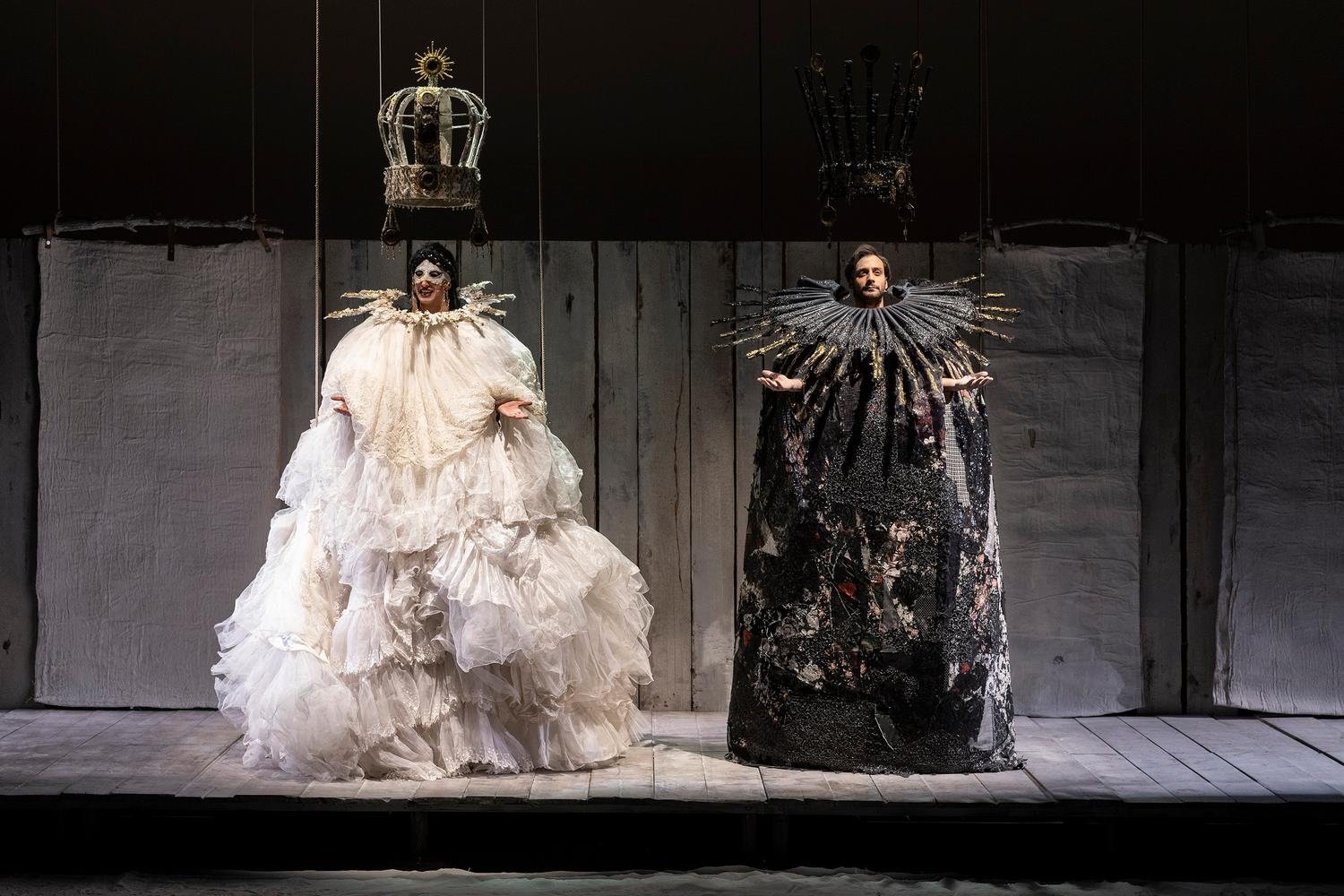
In 2022 the stage of the Teatro Elfo Puccini in Milan hosted a new interpretation of Oedipus Rex, directed by the duo Bruni-Frongia. The costumes were designed not by a traditional costume designer but by a fashion name: Antonio Marras. His creations enchanted the audience, becoming a living part of the stage and narrative elements in their own right.
Marras’s aesthetic universe - grotesque, romantic, deeply tactile - merged naturally with Sophocles’ tragedy. Lace, veils, raw wool, fur: every fabric told the fragility and the power of the characters. Here the costume did not simply accompany the action; it amplified it, visually and symbolically.
But when a fashion designer creates the stage costumes, who is really telling the story: the garment or the character?
Is theatre dressing up in fashion, or is fashion putting on a show?
Making a costume can resemble making a Haute Couture garment: one-off pieces, complex craftsmanship, refined fabrics. And yet the fashion designer’s role in the performing arts is very different. While the costume designer is a highly specialised figure who studies the historical context, the dramaturgy and the psychology of the characters, the fashion designer lays their own aesthetic imagination over the story, creating a short circuit of forms and contents.
It is both a clash of visions and an encounter. Think of Valentino’s costumes for “La Traviata” or Dolce&Gabbana’s for “Maria Stuarda”: examples where the identity of the brand merges with the identity of the work.
After all, the relationship between fashion and the performing arts is long and fruitful. Theatre, and cinema even more, are a huge source of inspiration for fashion. In recent decades many films have had famous fashion houses directly involved in making the costumes, turning the characters’ wardrobes into style icons.
It is not a recent trend. As early as the 1950s and ’60s, designers like Hubert de Givenchy were dressing stars of the calibre of Audrey Hepburn in Breakfast at Tiffany’s. In the ’80s, Giorgio Armani designed Richard Gere’s looks in American Gigolo. Today, Jonathan Anderson has brought his contemporary vision to the costumes of Queer.
And yet we wonder: when a look seen on screen or on stage enters the collective imagination, is it still a costume or is it already fashion?
The line is thin. Just think of Adrian, the legendary costume designer of classic Hollywood, who dressed stars like Rudolph Valentino and Joan Crawford. Without ever creating a collection, he deeply influenced the twentieth-century American silhouette.
Perhaps, rather than distinguishing between fashion and costume, it is more useful to separate fashion from the fashion business, since the first creates art and the second creates profit. And it is precisely in this free zone, where visual arts, stage and style meet, that something unique is born. As in Antonio Marras’s costumes for Oedipus Rex, where theatre wears fashion and fashion becomes theatre.