Vincenzo Latronico's Perfection: the world as image
By Simone Resigotti
Listen
Le perfezioni (published in English as Perfection) by Vincenzo Latronico is a novel that, in just 140 pages, lights up with rare clarity the thin line between images and reality. Published by Bompiani in 2022, it immediately won over the critics and was shortlisted for the Strega Prize. Now, in 2025, thanks to Sophie Hughes’s English translation, it has entered the UK’s top 50 bestsellers and reached the shortlist of the International Booker Prize, one of the most prestigious literary awards in the world.
The book is built in four movements: present, imperfect, past historic and future. Each is written in the corresponding tense. Everything is narrated in the third person plural: a constant “they” that observes the couple as the minimal unit of our time. It is the story of Anna and Tom, two young Italians who have moved to Berlin, immersed in a life that looks flawless: creative jobs, a stable relationship, a bright apartment. A daily life that scrolls by like a perfect feed. But beneath that surface grows a frustration they cannot name. Around them, like a second climate, the world of images piles up: omnipresent, saturated, unbroken.
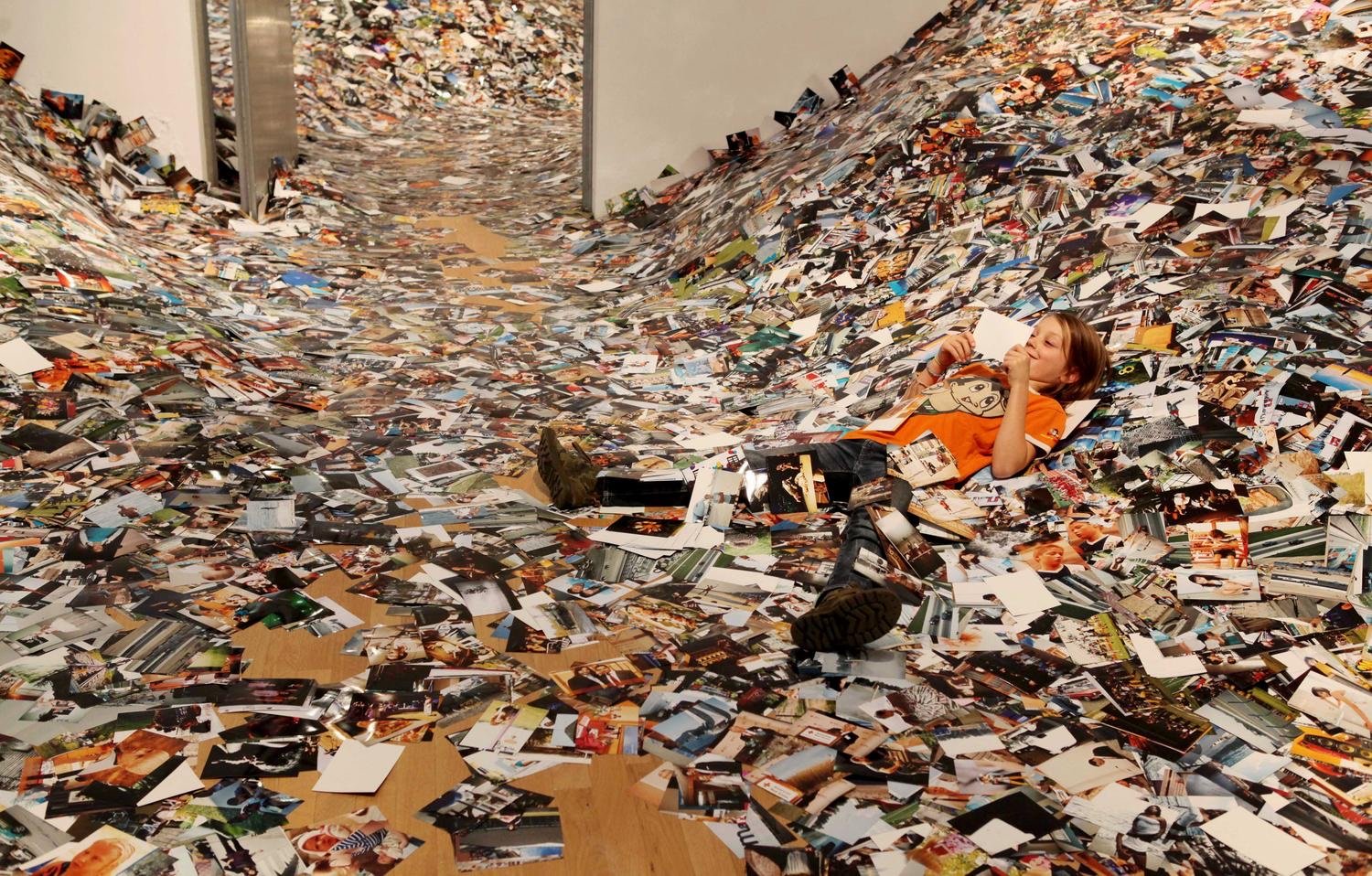
These are the images of social media: they wake them up on the smartphone, carry on on the tablet, expand on the monitor. Images compressed into a rectangle of glass that float before their eyes, lighting up their faces before sleep comes. Latronico brings them onto the page through lists that turn the feed into literature: a stream in which tragedy and beauty coexist without hierarchy, in a single flat, luminous space.
An egg became more famous than the Pope. A contagious virus devastated West Africa. A billionaire tipped a bucket of ice over his head. A fashion brand exploited weavers in East Asia. A girl recorded every time she was catcalled in the street. Two African Americans were killed by the police. A man filmed first kisses. A plane vanished on its way to Beijing. A woman was beautiful. A house full of plants was beautiful. A vegan quiche was beautiful. A child needed money for chemo. Time disappeared.
Perfection tells of the crack that opens the gap between image and reality, and of the ever more urgent search for something that resembles authenticity.
The life promised by images is clear and flawless. But reality is not always faithful to images - in fact, it almost never is.
And this is where the book’s great value lies: it shows how our life has become a constant overlaying of what we live onto what we see, a constant search for the differences between these two worlds in order to flatten them, so that what surrounds us comes to look more and more like all the so-called perfections we are bombarded with nonstop.
Latronico does not judge, condemn or offer solutions. He observes. He shows the exact point where the image begins to replace experience. He tells how you can get lost precisely while trying to build a “perfect” life. And in doing so he speaks to the generation that grew up believing the digital world would connect and expand life, and instead found itself in a reality where the image rules and every detail has to “work” online. A generation that lives a lot but feels little. That piles up experiences but struggles to feel their weight. That inhabits a world where form has become substance, and where happiness is often a well-framed shot rather than a feeling.